
There are far and few one mile races in the UK. The two major one mile events in London are the Westminster Mile, and City of London Mile. I would love to do the former, which unfortunately takes place a day before the Vitality 10,000, so I never do it to keep my legs fresh for the 10k. The City of London mile is free to enter, and a superb event. Very well organised, with a great atmosphere.
Author Archives: Andy Kumar
Elite Race Workstand review
Like many other cyclists, I like to regularly clean and service my pride and joy, ensuring that everything is working optimally and my bike is looking the part. Until now, I have been using a basic bike stand to keep my bike upright whilst cleaning it. This is not particularly ideal, as my bike would not be steady, and cleaning around the wheels was particularly troublesome, and to some degree, frustrating. I then decided it was time to invest in a quality work-stand, as I am also planning to do as much of my bike maintenance as possible myself. I should mention that I did not want a work-stand that clamps onto the seat-post, as my Canyon bikes both have carbon seat-posts.
Vitality London 10,000 2016 race report
The Bupa London 10,000, now rebranded as the Vitality London 10,000, is hands-down my favourite running event. Organised by the same team as the Virgin London Marathon and Adidas Silverstone Half Marathon, it boasts buttery smooth organisation and fantastic crowd support in the world’s greatest capital city. I pretty much see this event as a shortened version of the London Marathon, as it takes in many of the city’s most distinguished landmarks. I have run this event every year since 2012 (which was also my first ever road race), so have a special connection with it. I have been struggling with a gluteal injury since last summer, which has meant that I have been spending significantly less time running (and more time cycling). However, as things improved over the past few weeks, I could not pass up the opportunity to run today, so I signed-up in late April.
Castelli saddle bag review. What’s in my saddle bag?
As I embark on longer weekend rides, it is important to ensure that I keep some basic tools with me in the case of a mechanical/puncture. I have been risking my rides up until now, but finally got myself a worthy saddle bag. Many I have previously come across before seemed to be overly bulky, and I was looking for one which was discreet, compact, and looked good. It is no surprise that I like Castelli garments (and is my signature brand), so when I saw that there was a matching saddle bag available, my interest was piqued.
Canyon Ultimate CF SL 9.0 Aero review
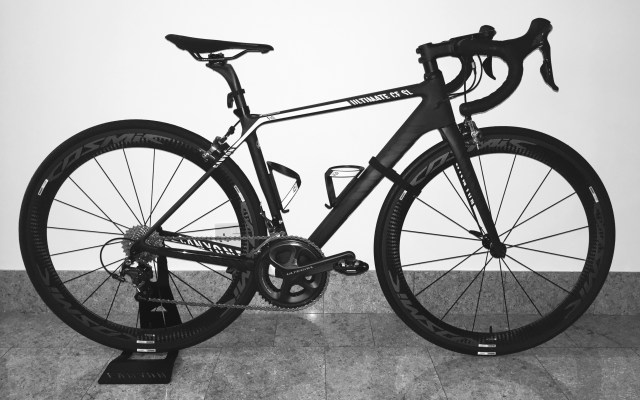
I have been cycling for less than a year, and in that short time, have taken a real passion to getting on the saddle. I had been struggling with a gluteal niggle from September (2015), which has now finally begun to resolve(!). This gave me the opportunity (over this time of less running) to focus my attention on riding. As many cyclists will agree, this can be an expensive addiction. I took delivery of my Canyon Endurace a couple of months ago, and was very impressed. Canyon truly do make some exceptional bikes. I have now just received the Canyon Ultimate CF SL 9.0 Aero.
Canyon Endurace 9.0 Di2 review
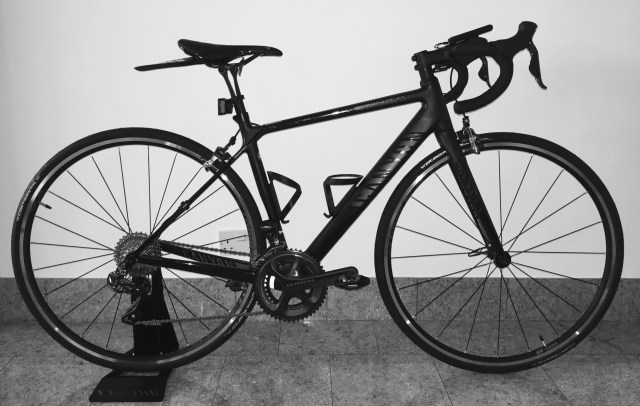
Ask any cyclist. It is a well known fact that Canyon make some amazing bikes. However, the exceptionally long waiting times for these magnificent bikes are equally as notorious. After some research and pondering, I placed an order for a Canyon Endurace CF 9.0 Di2 back in September 2015. It will come as no surprise to anyone who has ordered with Canyon in the latter half of 2015/early 2016, that my bike was subjected to a myriad of delays. Originally due to ship in November, then December, then January and finally March. After liaising directly with Canyon, expressing my frustration of waiting for so long, my bike was finally delivered on the 18th of February 2016; over 5 months (23 weeks!) after placing my order.
Zwift set-up tour
I have not owned a road bike for that long (just over 6 months), and merely took up the sport as a casual endeavour to compliment and support my running. However, since picking up a gluteal injury in September 2015 (piriformis syndrome), as well as facing some other health issues, my running mileage has unfortunately seen a dramatic decline. This has had a significant emotional impact on me, as I was hoping to have been at a sub 1:20 half marathon by this stage, having come from strength to strength from summer 2014 to 2015. It is also quite difficult to physically contain myself, as I cannot express in words alone how much I love being active. As I work toward recuperation, I have been extensively using Zwift. For the uninitiated, Zwift is an online cycling ‘game’, that allows you to hook up your turbo trainer to the software on your computer (via an ANT+ USB dongle), and cycle in an online world with other riders. I have already reviewed Zwift here:
Becoming a Wahooligan: A review of the KickR smart trainer
The Wahoo KickR is an exceptional turbo trainer, and arguably one of the best available on the market today. But at a recommended retail price of £950, it is not cheap, and probably what puts a lot of potential buyers off from the initial upfront investment. This included me a few months ago when I was buying my first turbo trainer, and opted for the CycleOps Jet Fluid Pro. Now, less than 2 months later, I have jumped onto the KickR scene, reasons for which I will explain shortly. But before that, let’s take a quick look at the specs of the KickR and what you get in the box.
Garmin Vivosmart- Jumping on the fitness tracker bandwagon (again!)
My first fitness/activity tracker was the Nike+ Fuelband, back in summer 2013. It was an interesting and motivational product at the time, and I used it for the better part of over a year. In the fall of 2014, I started to log my runs with Strava, and left Nike+ behind, purely due to their lack of software updates. As a result, my interest in the Fuelband also dwindled, and I subsequently stopped using that, too. I lead a fairly active lifestyle, and did not consider another activity tracker until fairly recently. I am actually still unsure whether to refer to such devices as “fitness” or “activity” trackers(!), but I digress.
I use a Garmin watch (fenix 3) to record my runs, which does doubles-up as a fitness tracker. However, it is not convenient/practical to wear it 24/7. The fenix 3 is a heavy and fairly bulky watch, and I spend around 50% of my my time wearing it, with the other time using an Apple watch. To this effect, the consideration of a dedicated fitness tracker on my other (right) wrist was a thought that I had been pondering over for a few months, but did not act upon. However, after Christmas this year (2015), I decided to check out what fitness trackers were available. My first thoughts were to get a Fitbit Charge HR, however, the Fitbit software is fairly restricted, and data cannot be shared with Garmin connect or Apple health. A little more browsing led me to the Garmin range, which made a lot of sense as my fenix 3 and Edge 1000 already use Garmin connect.
Zwift review, online interactive turbo training
The turbo trainer is a fantastic training tool. However, one of the biggest drawbacks I mentioned in my review of the CycleOps Jet Fluid Pro was that it can get slightly mundane to engage in stationary cycling on your own. I recently came across a software program called Zwift. To briefly summarise, Zwift can be installed onto your personal computer (mac/windows) and allows you to virtually cycle in some great locations, with other real riders, and track your performance. In this blog post I will be exploring what Zwift is, how to get set-up, and my thoughts based on my first ride.
 RUNNING, CYCLING AND TECH REVIEWS